
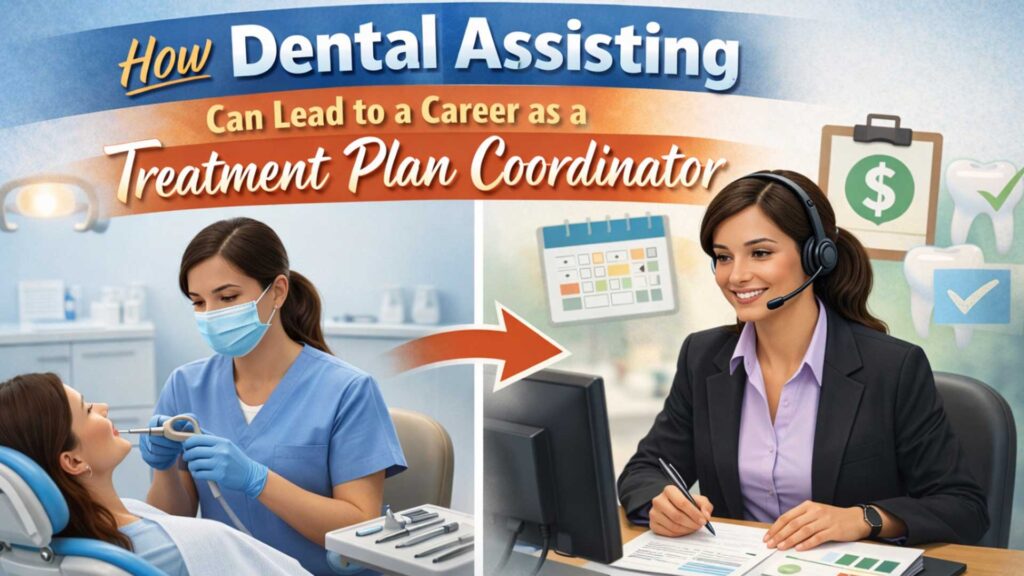
Dental assisting is often seen as the first step into the dental field. That is true, but it is not the whole story.
For many people, dental assisting becomes the starting point for a broader career path. Once you build hands-on experience in patient care, office workflow, and clinical procedures, new opportunities begin to open up. One of those opportunities is the role of treatment plan coordinator.
This position is a strong fit for people who enjoy working with patients, communicating clearly, and helping others feel more confident about their care.
What does a treatment plan coordinator do?
A treatment plan coordinator helps patients understand the care a dentist has recommended. That may include reviewing the purpose of a procedure, discussing scheduling, explaining financial options, and helping patients navigate insurance questions.
In plain English: this is the person who helps turn confusion into clarity.
Patients do not always say yes to treatment right away. Often, they need someone who can slow the conversation down, explain the next steps, and answer practical questions without overwhelming them. That is where treatment plan coordinators make a real difference.
Why dental assistants are a natural fit
Dental assistants already work close to both patients and providers. They see how procedures are performed, how appointments flow, and how patient concerns show up in real time. That experience matters.
A dental assistant often develops skills that transfer well into treatment coordination, including:
- Strong chairside communication
- Familiarity with common dental procedures
- Understanding of patient concerns and anxiety
- Knowledge of scheduling and office systems
- Exposure to billing, payments, or insurance processes
- The ability to stay organized in a fast-moving environment
That combination is hard to teach from scratch. Dental assistants already have the foundation.
The human side of the job
This role is not only about paperwork or payment options. It is also about trust.
Patients may feel nervous, embarrassed, uncertain about cost, or hesitant about treatment. A good treatment plan coordinator knows how to listen, explain, and guide without sounding pushy. That requires empathy, professionalism, and strong communication.
That is one reason many dental assistants transition well into this role. They are already used to helping patients feel more comfortable in a clinical setting.
Skills that matter in treatment coordination
Someone can grow into this career through experience, but the strongest candidates usually build a mix of technical and people skills.
These include:
- Clear verbal communication
- Attention to detail
- Problem-solving
- Professional follow-up
- Confidence discussing treatment timelines
- Basic knowledge of dental insurance and payment options
- Patience with patients who need time to make decisions
It is not glamorous. It is useful. And in a dental office, useful wins.
How training can help you get there
A good dental assisting education should prepare students for more than one narrow task. It should give them a working understanding of how a dental office runs as a whole.
At Career First Institute, our Dental Assisting program is built around practical, real-world learning. Students train in a real dental office environment and gain exposure to treatment rooms, labs, sterilization areas, x-ray equipment, and front desk operations. Our goal is to help students build confidence, develop workplace-ready skills, and prepare for real opportunities in the field.
That kind of preparation matters because careers in dentistry reward people who can do more than one thing well. Clinical awareness, patient communication, and office readiness all create room for growth.
Is treatment plan coordination a good next step?
It can be, especially for dental assistants who want to stay in the field while taking on more responsibility in communication, case presentation, and patient support.
This path may be a smart move for someone who:
- Enjoys talking with patients
- Wants to build stronger administrative and financial knowledge
- Likes helping people make informed decisions
- Is interested in long-term growth within the dental office setting
Not everyone wants to stay chairside forever. Fair enough. Treatment coordination is one way to keep building a career in dentistry without starting over.
Start with the right foundation
Every long-term career move starts with solid entry-level training. Dental assisting gives students a front-row view of the dental profession and helps them develop practical skills they can carry into future roles.
For students who want a focused, career-centered training experience, Career First Institute offers a hands-on path designed to prepare graduates for the real demands of today’s dental offices. From patient support to workplace readiness, the right training can help you take the first step toward a career with room to grow.
Ready to begin your path in dental assisting? Career First Institute is here to help you build practical skills, confidence, and a stronger future in the dental field.