
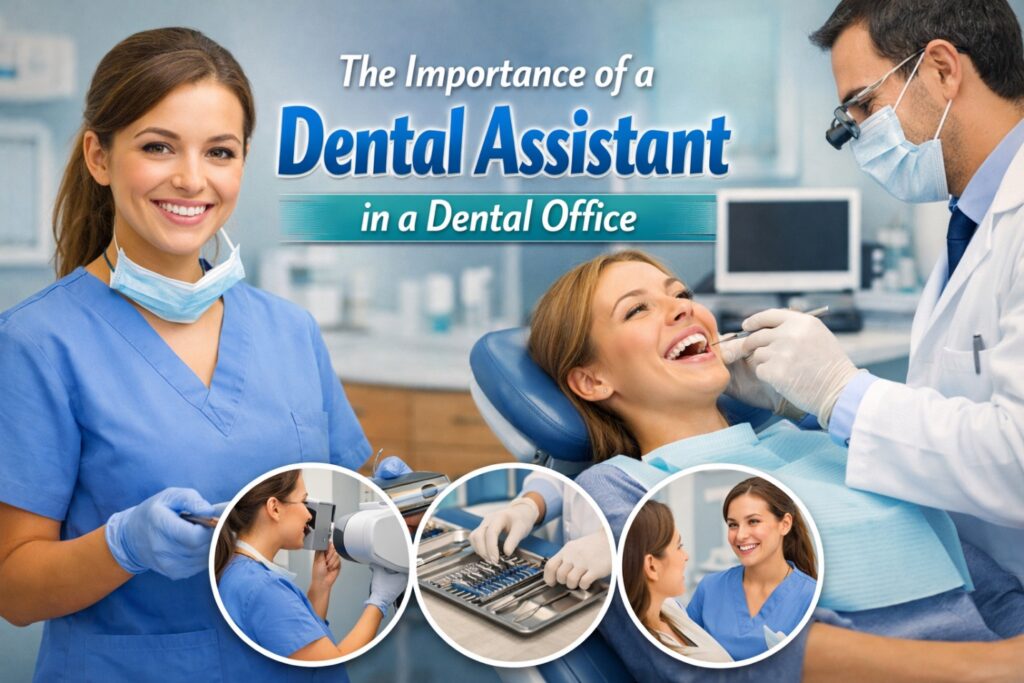
When people think about a dental office, the first person who usually comes to mind is the dentist. But anyone who has spent real time in a successful practice knows the truth: a dental office cannot run efficiently without a skilled dental assistant.
Dental assistants play a critical role in patient care, office workflow, clinical support, and the overall success of a dental practice. They are often the first reassuring face a patient sees, the extra set of trained hands a dentist relies on, and the behind-the-scenes professionals who help keep everything organized and moving smoothly.
For students considering a future in healthcare, becoming a dental assistant offers a strong entry point into a rewarding, respected, and growing field. For dental offices, hiring trained dental assistants is not a luxury. It is a necessity.
What Does a Dental Assistant Do?
A dental assistant supports both the dentist and the patient throughout the treatment process. Their responsibilities can vary depending on the office, but their role usually includes a combination of clinical, administrative, and patient-focused duties.
Common responsibilities of a dental assistant include:
- Preparing treatment rooms before procedures
- Sterilizing and organizing instruments
- Assisting the dentist during exams and procedures
- Passing instruments and suctioning during treatment
- Taking and processing dental X-rays
- Updating and maintaining patient records
- Scheduling appointments and handling basic front-office duties
- Educating patients on oral hygiene and post-treatment care
- Ensuring patients feel comfortable before, during, and after procedures
In short, dental assistants help create the structure that allows a dental office to function efficiently and professionally every day.
Why Dental Assistants Are So Important in a Dental Office
1. They Help Keep the Office Running Smoothly
A dental office is a fast-paced environment. Patients need to be checked in, treatment rooms must be prepared, instruments have to be sterilized, and procedures often happen back-to-back throughout the day. Without a dental assistant, the office can quickly become disorganized and inefficient.
Dental assistants help manage that flow. They prepare everything the dentist needs before a procedure begins and help reduce downtime between patients. Their ability to stay organized and anticipate the next step allows the entire office to operate more effectively.
A skilled dental assistant helps turn chaos into order. That matters more than most people realize.
2. They Improve Patient Comfort and Experience
A lot of people feel nervous about going to the dentist. Some patients walk in with anxiety, fear, or embarrassment about their oral health. Dental assistants often help ease those concerns.
They greet patients, explain procedures, answer basic questions, and offer reassurance during appointments. Their calm, professional presence can make a major difference in how a patient feels.
That patient experience matters. When people feel comfortable and respected, they are more likely to return for regular care, follow treatment recommendations, and trust the dental team.
Dental assistants are often the bridge between clinical treatment and human connection.
3. They Support the Dentist During Procedures
Dentists rely heavily on dental assistants during many procedures. From handing instruments to maintaining a clear field of view, dental assistants make it possible for the dentist to work more efficiently and safely.
This support is not minor. It directly affects:
- Procedure speed
- Patient comfort
- Infection control
- Treatment accuracy
- Overall workflow
Four-handed dentistry, where the dentist and assistant work together in a coordinated way, is a standard practice for a reason. It improves productivity and reduces strain on the dentist. A trained dental assistant helps make that teamwork possible.
4. They Help Maintain Safety and Infection Control
Dental offices must follow strict health and safety protocols. Sterilization, disinfection, and infection control are not optional. They are essential.
Dental assistants are often responsible for cleaning instruments, disinfecting treatment areas, setting up sterile trays, and helping ensure the office meets required safety standards. They play a direct role in protecting both patients and staff from cross-contamination and infection risks.
In a healthcare setting, attention to detail can never slip. Dental assistants are trusted with that responsibility every day.
5. They Increase Practice Efficiency and Productivity
Time matters in a dental office. The more efficiently the team works, the better the schedule flows and the more patients can receive care. Dental assistants help dentists stay focused on treatment instead of getting pulled into tasks that interrupt workflow.
When a dental assistant is well trained, the office benefits in several ways:
- Faster room turnover
- Better appointment flow
- Fewer delays
- Improved communication among staff
- Higher patient satisfaction
That level of efficiency can directly affect the success of the practice. Put simply, dental assistants help the business side of dentistry work better too.
6. They Play a Role in Patient Education
Good dental care does not end when the patient leaves the chair. Patients need clear guidance on brushing, flossing, post-procedure care, and ongoing oral health habits.
Dental assistants often help reinforce these instructions. They explain aftercare, review oral hygiene practices, and encourage patients to take a more active role in their dental health.
That education matters. Preventive care saves time, money, and discomfort. Dental assistants help patients understand how to protect their smiles long after the appointment is over.
The Value of Dental Assistants Beyond Clinical Tasks
One of the biggest misconceptions about dental assistants is that they “just help the dentist.” That description is far too narrow.
Dental assistants contribute to the overall culture and quality of a dental office. They support teamwork, improve communication, and help create a professional environment where patients feel cared for.
They are problem-solvers, multitaskers, and team players. On any given day, they may switch from assisting during a procedure to calming an anxious patient to handling records or prepping the next treatment room. That requires technical knowledge, adaptability, and strong people skills.
It is a demanding role, but it is also one with real purpose.
Why Dental Assisting Is a Strong Career Choice
For individuals looking to start a meaningful healthcare career, dental assisting offers several advantages.
Fast Entry into the Workforce
Unlike some healthcare careers that require years of education, dental assisting can provide a more direct path into the field. With the right training program, students can develop the skills needed to begin working in a relatively short period of time.
That makes it an attractive option for people who want to start building a career without spending years in school.
Hands-On, People-Focused Work
Dental assisting is ideal for people who enjoy working with others and want a career that keeps them active and engaged. It is not a desk job where every day feels the same. It is hands-on, fast-moving, and centered on helping people.
For those who like healthcare but also value teamwork and patient interaction, dental assisting offers a strong fit.
Opportunities for Growth
Dental assisting can also be a stepping stone to other healthcare opportunities. Some professionals choose to continue their education and move into fields such as dental hygiene, office management, or expanded dental functions.
Even for those who stay in dental assisting long term, there are opportunities to grow in skill, responsibility, and value within a practice.
Meaningful Impact
This is the part that matters most. Dental assistants help people every day. They help patients feel calmer, healthier, and more confident. They support procedures that relieve pain, restore smiles, and improve quality of life.
That is real work with real impact.
Why Training Matters
A dental office depends on assistants who are properly trained and ready to handle the demands of the role. Employers want professionals who understand dental procedures, infection control, patient care, radiography, office protocols, and communication.
That is why education matters.
A quality training program can help students build the technical knowledge and practical experience needed to step into the field with confidence. It can also help them develop the professionalism and work ethic employers value.
At Career First Institute, students preparing for a future in dental assisting can gain career-focused training designed to help them pursue opportunities in today’s dental offices. With the right education and support, students can move toward a career that is both stable and rewarding.
Final Thoughts
Dental assistants are essential to the success of any dental office. They support dentists, improve patient care, maintain safety, and help the practice run efficiently from start to finish. Their role is dynamic, valuable, and often underestimated by people outside the profession.
The truth is simple: a strong dental office depends on strong dental assistants.
For those considering a healthcare career, dental assisting offers a practical path into a profession where skill, compassion, and teamwork matter every single day. It is more than a job title. It is a career built on helping others and making a difference. And in a field as important as dental care, that role deserves real respect.