
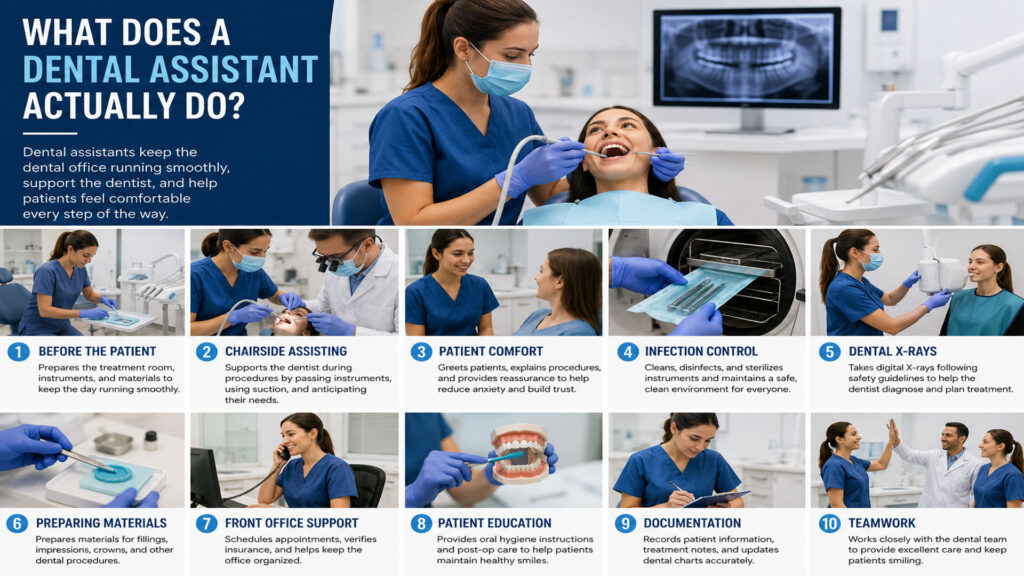
When most people think of a dental office, they picture the dentist working on a patient while someone nearby hands over instruments. That person is often the dental assistant — but the role is much bigger than simply “passing tools.”
Dental assistants are one of the most important parts of a dental team. They help keep the office running smoothly, support the dentist during procedures, make patients feel comfortable, and help maintain a safe, clean, and organized clinical environment. In many ways, dental assistants are the connection between the patient, the dentist, and the rest of the dental office.
For students considering a career in healthcare, dental assisting can be a practical and rewarding path. It offers hands-on patient care, a professional office environment, and the opportunity to build skills that are needed every day in dental practices.
What Is a Dental Assistant?
A dental assistant is a trained member of the dental team who supports dentists, hygienists, and patients before, during, and after dental procedures. Dental assistants work in general dental offices, orthodontic offices, oral surgery offices, pediatric dental practices, endodontic offices, periodontic offices, and other specialty practices.
Their duties may vary depending on the state, the dental office, and the level of training or certification required. However, the core purpose is the same: dental assistants help make dental care safer, smoother, faster, and more comfortable for patients.
A Dental Assistant’s Day Starts Before the Patient Sits Down
A good dental appointment does not begin when the dentist enters the room. It starts much earlier.
Before a patient is seated, the dental assistant prepares the treatment room. This may include reviewing the schedule, setting up the correct instruments, preparing materials, checking supplies, and making sure the room is clean and ready.
Dental assistants must think ahead. A filling appointment, a crown appointment, an extraction, and an orthodontic visit all require different setups. The assistant needs to know what procedure is planned and what the dentist will likely need.
This preparation helps reduce delays, keeps the office organized, and allows the dentist to focus on patient care.
Chairside Assisting: Supporting the Dentist During Treatment
One of the most visible responsibilities of a dental assistant is chairside assisting. During procedures, the dental assistant works closely with the dentist to help treatment move efficiently.
Chairside assisting may include:
- Passing instruments to the dentist
- Using suction to keep the mouth dry and clear
- Retracting the cheek, tongue, or lips
- Preparing dental materials
- Mixing or dispensing materials
- Helping isolate the tooth being treated
- Monitoring patient comfort
- Anticipating what the dentist needs next
This role requires attention, timing, and focus. A strong dental assistant does not just wait for instructions. They learn the flow of procedures and stay one step ahead.
That skill comes with training, practice, and confidence.
Helping Patients Feel Comfortable
Dental anxiety is common. Many patients feel nervous before a dental appointment, especially if they are in pain or need a procedure they have never had before.
Dental assistants often spend more time with the patient than anyone else in the office. They greet the patient, seat them, explain what may happen next, and help them feel at ease.
A dental assistant may answer basic questions, reassure the patient, offer protective eyewear, adjust the chair, or simply speak in a calm and friendly way. These small actions matter. Patients remember how they were treated.
A skilled dental assistant understands that patient care is not only clinical. It is also emotional. Making patients feel safe, respected, and heard is a major part of the job.
Infection Control and Sterilization
One of the most important responsibilities of a dental assistant is infection control. Dental offices must follow strict safety procedures to protect patients, staff, and providers.
Dental assistants help with:
- Cleaning and disinfecting treatment rooms
- Sterilizing instruments
- Packaging instruments properly
- Setting up clean trays
- Handling contaminated materials safely
- Wearing proper personal protective equipment
- Following OSHA and office safety protocols
This part of the job requires discipline. There is no room for shortcuts. Proper sterilization and infection control are essential in every dental practice.
For students entering the dental field, learning safety and sterilization procedures is one of the first major steps toward becoming a dependable dental assistant.
Taking Dental X-Rays
Dental radiographs, commonly called X-rays, are a major part of diagnosis and treatment planning. Depending on state requirements and office protocols, dental assistants may be trained to take dental X-rays.
This can include bitewing X-rays, periapical X-rays, full-mouth series, panoramic images, and other types of dental imaging.
Dental assistants must understand patient positioning, image quality, radiation safety, and the importance of following the ALARA principle, which means keeping radiation exposure “as low as reasonably achievable.”
Good X-rays help the dentist diagnose cavities, bone loss, infections, impacted teeth, and other dental concerns. Poor X-rays can delay treatment or require retakes, which wastes time and exposes the patient unnecessarily.
That is why radiology training is an important part of dental assistant education.
Preparing Materials and Dental Impressions
Dental assistants may help prepare materials used during treatment. This can include materials for fillings, crowns, temporary crowns, impressions, sealants, fluoride, and other dental procedures.
They may also assist with dental impressions or digital scans, depending on the office. Impressions are used for items such as retainers, nightguards, crowns, bridges, dentures, and orthodontic appliances.
Accuracy matters. A small mistake in an impression or material setup can affect the final result. Dental assistants need steady hands, good attention to detail, and an understanding of why each step matters.
Keeping the Dentist on Schedule
Dental offices are busy. A dentist may move between multiple rooms, see emergency patients, perform procedures, complete exams, and review treatment plans all in the same day.
Dental assistants help keep the schedule moving.
They prepare rooms, seat patients, take X-rays, update the dentist, clean and reset operatories, and communicate with other team members. When assistants are trained well, the entire office becomes more efficient.
A strong dental assistant can make a major difference in the flow of the day. When the assistant is prepared, organized, and proactive, the dentist can work more effectively and patients experience fewer delays.
Documentation and Charting
Dental assistants may also help with documentation. This can include updating patient information, recording treatment notes as directed by the dentist, documenting medical history changes, and entering procedure details.
Accurate documentation is important for patient care, insurance claims, legal records, and communication between providers.
Dental assistants must learn dental terminology, tooth numbering, surfaces of teeth, common dental procedures, and how to communicate clearly in a clinical setting.
This is one reason dental assisting is not just a “hands-on” job. It also requires knowledge, professionalism, and attention to detail.
Explaining Post-Operative Instructions
After a procedure, patients often need instructions. For example, after an extraction, filling, crown, deep cleaning, or oral surgery procedure, the patient may need to know what to expect, what to avoid, and when to call the office.
Dental assistants often help explain these instructions under the dentist’s direction.
This may include reviewing:
- Eating and drinking guidelines
- How to manage numbness
- How to care for the treated area
- What symptoms are normal
- What symptoms require a call to the office
- When to return for follow-up care
Clear communication helps patients recover properly and reduces confusion after they leave the office.
Administrative Support
In some dental offices, dental assistants also help with front office tasks. This may include scheduling appointments, answering phones, updating patient records, reviewing treatment plans, communicating with the front desk, or helping patients understand the next steps in their care.
Even if a dental assistant works mainly in the clinical area, they still need to understand how the front and back office connect. Dentistry is a team-based environment. Communication between the dental assistant, dentist, hygienist, front desk, and office manager is essential.
Dental Assistants Work in Many Types of Dental Offices
Dental assisting can open doors to different areas of dentistry. A dental assistant may work in:
- General dentistry
- Pediatric dentistry
- Orthodontics
- Oral surgery
- Endodontics
- Periodontics
- Prosthodontics
- Cosmetic dentistry
- Dental implant offices
- Public health clinics
Each setting has its own pace and procedures. For example, an orthodontic assistant may help with braces and aligners, while an oral surgery assistant may help with extractions and surgical procedures. A general dental assistant may help with fillings, crowns, exams, X-rays, cleanings, emergencies, and many other services.
This variety is one reason many people find dental assisting interesting. The work is active, hands-on, and rarely boring.
What Skills Does a Dental Assistant Need?
A successful dental assistant needs both technical and personal skills.
Important technical skills include:
- Understanding dental instruments
- Knowing dental terminology
- Following infection control procedures
- Taking dental X-rays when permitted
- Preparing rooms and materials
- Assisting during procedures
- Understanding tooth numbers and basic anatomy
- Maintaining accurate records
Important personal skills include:
- Communication
- Patience
- Professionalism
- Organization
- Attention to detail
- Teamwork
- Reliability
- Calmness under pressure
Dental offices need assistants who show up prepared, learn quickly, respect patients, and work well with the team. Skills can be taught, but professionalism is what makes someone stand out.
Is Dental Assisting a Good Career Path?
For many people, dental assisting is a strong entry point into healthcare. It allows students to begin working in a professional clinical setting without spending years in school before entering the field.
Dental assisting can also be a stepping stone. Some dental assistants later continue their education to become dental hygienists, dental office managers, treatment coordinators, dental sales representatives, expanded-function dental assistants, or even dentists.
Others build long-term careers as dental assistants because they enjoy the hands-on work, patient interaction, and stability of the dental field.
The bottom line is simple: dental assistants are needed. Dental offices depend on them every day.
Why Training Matters
Dental assisting may look simple from the outside, but it requires proper training. A good dental assistant must understand safety, sterilization, dental procedures, radiology basics, patient communication, and clinical workflow.
Training helps students build confidence before entering a dental office. It also helps them understand what dentists expect from a professional assistant.
At Career First Institute, students learn the foundational skills needed to begin a career in dental assisting, including chairside assisting, infection control, radiology concepts, impressions, dental terminology, and practical clinical skills.
The goal is not only to teach students what to do, but to help them understand why each step matters.
What Makes a Great Dental Assistant?
A great dental assistant is prepared, focused, and dependable. They notice details. They care about patient comfort. They stay organized when the schedule gets busy. They communicate clearly with the dentist and team.
Great assistants do not just “help.” They make the entire dental visit better.
They help the dentist work efficiently.
They help patients feel comfortable.
They help the office stay on schedule.
They help maintain safety and cleanliness.
They help create a positive patient experience.
That is why dental assistants are such valuable members of the dental team.
Start Your Dental Assisting Career with Career First Institute
If you are interested in healthcare and want a hands-on career path, dental assisting may be a smart place to start. It is practical, active, people-focused, and important to the daily success of a dental office.
Career First Institute provides dental assistant training designed to help students build real-world skills and prepare for the dental office environment.
Whether you are starting a new career, changing fields, or looking for a faster path into healthcare, dental assisting can give you a strong foundation.
To learn more about the Dental Assistant Program at Career First Institute, visit careerfirst.org or contact the school for upcoming class information.
Final Thoughts
Dental assistants do much more than people realize. They prepare rooms, assist during procedures, take X-rays when trained and permitted, sterilize instruments, comfort patients, document treatment, and support the entire dental team.
A dental office cannot run well without skilled dental assistants.
For anyone asking, “What does a dental assistant actually do?” the answer is clear: they help make quality dental care possible.