
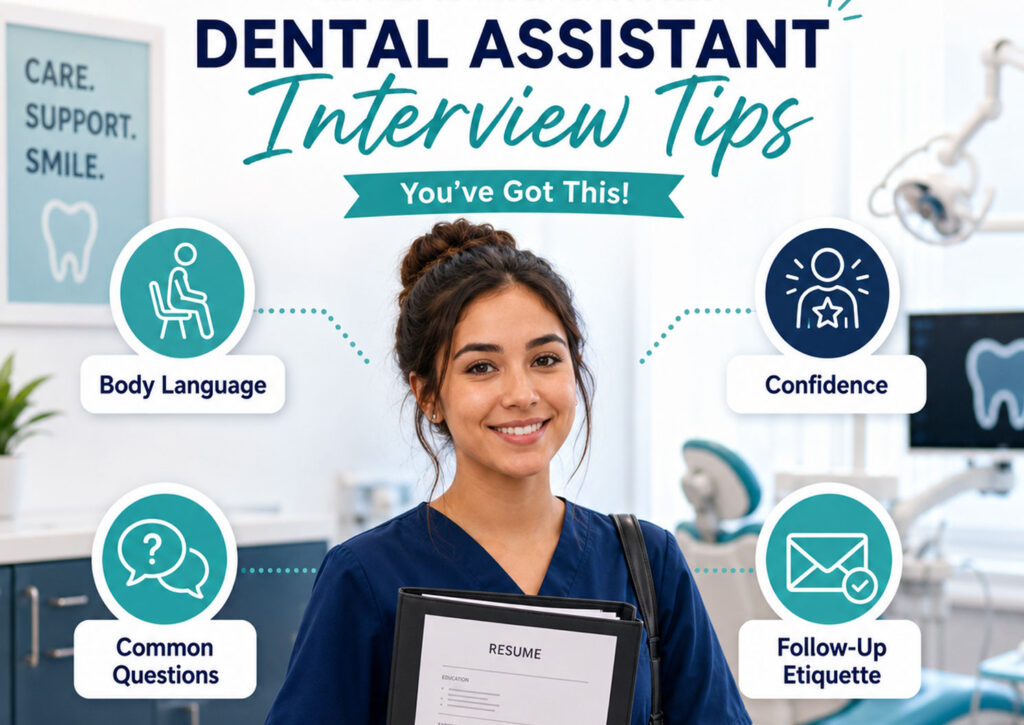
Starting your first job search can feel intimidating, especially if you are entering a professional healthcare setting for the first time. For students training to become dental assistants, the interview is more than a conversation. It is your opportunity to show that you are reliable, prepared, eager to learn, and ready to support both the dental team and patients.
At Career First Institute, our Dental Assistant Program helps students build the clinical, administrative, and professional skills needed to step confidently into the dental field. But technical knowledge is only part of getting hired. How you present yourself during the interview matters just as much.
Whether you are applying for your first dental assistant position, externship opportunity, or entry-level role in a dental office, these interview preparation tips can help you make a strong first impression.
1. Understand What Dental Offices Are Looking ForDental offices are not only looking for someone who knows dental terminology or understands sterilization procedures. They are looking for someone who can be trusted in a fast-paced, patient-focused environment.
A strong dental assistant candidate should show:
Reliability, professionalism, good communication skills, attention to detail, willingness to learn, respect for infection control, and the ability to work well with dentists, hygienists, front desk staff, and patients.
For first-time job seekers, employers usually do not expect perfection. They do expect preparation. If you show that you are serious, coachable, and professional, you are already ahead of many applicants.
2. Practice Good Body LanguageBefore you say a word, your body language is already speaking for you. In a dental office, patient comfort matters. Employers want to see that you can present yourself in a calm, respectful, and confident way.
When you arrive for the interview, stand tall, smile naturally, and greet the interviewer politely. Offer a firm but not aggressive handshake if appropriate. Sit upright, keep your shoulders relaxed, and avoid crossing your arms, slouching, or looking down too often.
Eye contact is important, but do not stare like you are trying to win a blinking contest. Keep it natural. Look at the interviewer when they are speaking and when you are answering questions.
Avoid nervous habits such as tapping your foot, playing with your hair, checking your phone, or fidgeting with papers. These may seem small, but they can make you appear distracted or unsure.
Good body language tells the employer: “I am present, respectful, and ready to be part of a professional healthcare team.”
3. Prepare for Common Interview QuestionsMost first-time job seekers feel nervous because they do not know what they will be asked. The good news is that many interview questions are predictable. Preparing answers ahead of time can help you feel calmer and more confident.
Here are some common questions dental assistant candidates may hear:
“Tell me about yourself.”
This is not the time to tell your whole life story. Keep your answer focused on your training, interest in dentistry, and professional goals.
Example answer:
“I recently completed training in dental assisting and developed skills in chairside assisting, sterilization, radiology basics, and patient communication. I enjoy working in a healthcare environment and like that dental assisting allows me to help patients while supporting the dental team. I am looking for an opportunity where I can continue learning and grow as a dental assistant.”
“Why do you want to become a dental assistant?”
Employers want to know your motivation. A strong answer connects your interest in healthcare, patient care, and hands-on work.
Example answer:
“I wanted a career where I could work directly with patients and be part of a healthcare team. Dental assisting interested me because it combines clinical skills, organization, communication, and patient care. I like that every day is active and that dental assistants play an important role in helping appointments run smoothly.”
“What are your strengths?”
Choose strengths that matter in a dental office.
Good examples include being dependable, organized, calm under pressure, detail-oriented, a quick learner, and good with people.
Example answer:
“One of my strengths is that I am dependable and willing to learn. I understand that dental offices depend on teamwork and timing, so I take attendance, preparation, and following instructions seriously.”
“What is one weakness you are working on?”
Do not say, “I have no weaknesses.” Everyone has weaknesses. The key is to show self-awareness and improvement.
Example answer:
“Since I am new to the field, I know I still need more real-world experience. I am working on building speed and confidence while still making sure I follow proper procedures carefully.”
“How would you handle a nervous patient?”
This is a very relevant question for dental assistants.
Example answer:
“I would stay calm, speak respectfully, and help the patient feel heard. I would explain what I am allowed to explain, reassure them that the dental team is there to help, and let the dentist or hygienist know if the patient has concerns.”
“Are you comfortable with sterilization and infection control?”
Dental offices take infection control seriously. Your answer should show that you understand its importance.
Example answer:
“Yes. I understand that sterilization and infection control are essential for patient safety and team safety. I know it is important to follow office protocols carefully, use proper PPE, and never take shortcuts.”
4. Build Confidence Before the InterviewConfidence does not mean acting like you know everything. In fact, pretending to know everything as a new graduate is a fast way to lose trust. Real confidence means being honest, prepared, and willing to learn.
Before your interview, review your dental assistant training topics, including basic dental terminology, instrument identification, sterilization, chairside assisting, radiology safety, and patient communication. You do not need to memorize a textbook, but you should be able to talk about what you learned.
Practice answering interview questions out loud. Reading answers in your head is not enough. Speaking them out loud helps you sound more natural during the real interview.
You should also prepare a short introduction about yourself. This helps prevent freezing when the interviewer says, “Tell me about yourself.”
Dress professionally, arrive early, bring copies of your resume, and make sure your phone is silenced. These basics matter. Being late to an interview for a healthcare job sends the wrong message immediately.
Confidence comes from preparation. The more prepared you are, the less nervous you will feel.
5. Ask Smart QuestionsAn interview is not only about the employer choosing you. It is also your chance to learn whether the office is a good fit.
At the end of the interview, you may be asked, “Do you have any questions for us?” Always have at least two questions ready.
Good questions include:
“What qualities do you look for in a successful dental assistant?”
“What would training look like for a new dental assistant in your office?”
“How does the dental assistant support the dentist during a typical day?”
“What is the office culture like?”
“What are the next steps in the hiring process?”
Avoid making your first questions only about pay, vacation, or time off. Those topics matter, but first show that you care about the position, the team, and doing the job well.
6. Show Professional Follow-Up EtiquetteThe interview does not end when you walk out the door. Following up properly can help you stand out.
After the interview, send a short thank-you email within 24 hours. Keep it professional and simple.
Example:
“Thank you for taking the time to meet with me today. I appreciated learning more about your office and the dental assistant position. I am excited about the opportunity to contribute to your team and continue growing in the dental field. Thank you again for your consideration.”
This small step shows professionalism, respect, and genuine interest. Many applicants skip it. Do not be one of them.
If you do not hear back right away, wait a few business days before following up. A polite follow-up is fine. Repeated calls or messages are not. There is a difference between being interested and becoming a full-time notification.
7. Be Honest About Your ExperienceAs a first-time job seeker, you may worry that you do not have enough experience. That is normal. Employers hiring entry-level dental assistants understand that you are still learning.
Do not exaggerate your skills. If you have practiced something in school but have not done it in a live office setting yet, say that clearly.
For example:
“I practiced this during training, and I am comfortable with the basic steps. I would still want to follow the office’s specific protocol and receive guidance as I continue building experience.”
That answer is honest, mature, and professional. Dental offices would rather train someone honest and careful than someone overconfident and unsafe.
8. Remember That Attitude MattersSkills can be taught. A poor attitude is much harder to fix.
Dental offices value team members who are respectful, flexible, punctual, and willing to help. As a new dental assistant, your attitude can be one of your strongest assets.
Show that you are ready to learn. Show that you can accept feedback. Show that you understand patient care is the priority.
A great attitude does not mean being fake or overly cheerful. It means being professional, dependable, and solutions-focused.
Final Thoughts
Your first dental assistant interview may feel overwhelming, but it is also the beginning of an exciting career path. With preparation, good body language, thoughtful answers, confidence, and professional follow-up, you can make a strong impression even as a first-time job seeker.
Career First Institute’s Dental Assistant Program is designed to help students gain the knowledge, hands-on training, and career readiness skills needed to enter the dental field with confidence. From learning chairside assisting and sterilization to preparing for interviews and job opportunities, students are supported as they take the next step toward a meaningful healthcare career.
If you are ready to start your journey toward becoming a dental assistant, Career First Institute can help you build the foundation for your future.